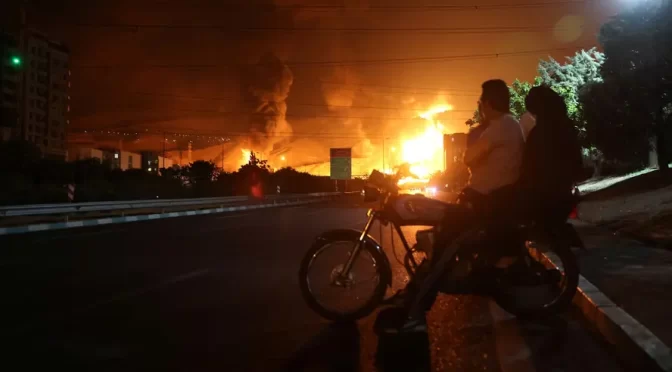
- USA-Iran, At War for over 70 years or more, to present. ITS NOTHING NEW.
- TO Stop Iran from having Nuclear Weapons, We Must got to war, Netanyahu
- Isreal Strikes IRAN
- Trump, Both Military and Political Move, a build up from PRIOR Presidential Candidates.
President Trump: “Monumental Damage was done to all Nuclear sites in Iran, as shown by satellite images. Obliteration is an accurate term! The white structure shown is deeply embedded into the rock, with even its roof well below ground level, and completely shielded from flame. The biggest damage took place far below ground level. Bullseye!!!”
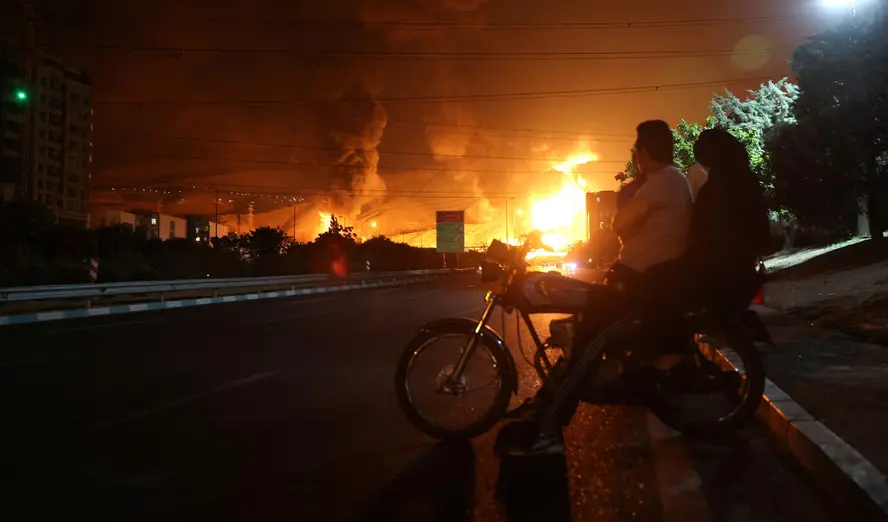
To understand today’s headlines, we must look back at the historical roots of the U.S.-Iran conflict, a rivalry spanning over 70 years. From the 1953 coup to the 1979 Islamic Revolution and the 2025 U.S. strikes on Iran’s nuclear facilities, this is a story of pride, ideology, and escalating tensions. As Israel, led by Prime Minister Benjamin Netanyahu, pushes for war to stop Iran’s nuclear ambitions, and President Donald Trump balances military and political objectives, the region teeters on the edge of further conflict. Here’s the full history and what’s at stake.
A Proud Legacy: Iran’s Historical Context
Iran, heir to the ancient Persian Empire, has a history of resilience, holding its own against the Roman Empire and ruling much of the modern Arab world at its peak. Despite current challenges like poverty and dysfunction, Iran’s cultural pride fuels its resistance to foreign influence. The Islamic Revolution of 1979, led by Ayatollah Ruhollah Khomeini, cemented an anti-American ideology that defines the regime. The ayatollahs justify their rule by opposing the “libertine and decadent” West, particularly America, blending religious zeal with defiance of U.S. power.
Key Historical Milestones
- 1953: U.S.-Backed Coup
Under President Dwight D. Eisenhower, following President Harry S. Truman, the U.S. and United Kingdom orchestrated a coup to overthrow Iran’s democratically elected Prime Minister Mohammad Mossadegh, who sought to nationalize Iran’s oil industry. The CIA and British intelligence installed Mohammad Reza Pahlavi, the Shah, as a pro-Western autocrat, deepening Iranian resentment toward the U.S.
- 1979: Islamic Revolution and Hostage Crisis
The Islamic Revolution overthrew the Shah, who fled Iran. President Jimmy Carter allowed the Shah to enter the U.S. for cancer treatment, sparking outrage in Iran. On November 4, 1979, Iranian students stormed the U.S. Embassy in Tehran, taking 52 Americans hostage for 444 days. The crisis entrenched mutual enmity between Washington and Tehran.
- 1980: Failed Rescue and Iran-Iraq War
In April 1980, President Carter ordered a rescue operation for the hostages, which failed when aircraft crashed, killing eight U.S. servicemembers. During the Iran-Iraq War (1980-1988), the U.S., under President Ronald Reagan, supported Iraq’s Saddam Hussein with critical intelligence, further alienating Iran.
- 1980s: Reagan’s Arms-for-Hostages Scandal
President Reagan attempted to ease tensions by trading arms for hostages held by Iran-backed Hezbollah in Lebanon. The Iran-Contra affair became a scandal, undermining trust. Iran was designated a state sponsor of terror in 1984 after attacks, including the 1983 bombing of a U.S. Marine barracks in Beirut, killing 241 Americans, blamed on Hezbollah.
- Post-9/11: Missed Opportunities
After the 9/11 attacks, Iran cooperated with the U.S. in Afghanistan to establish a new government. However, President George W. Bush labeled Iran part of an “Axis of Evil” in 2002, alongside Iraq and North Korea, halting progress. This rhetoric soured potential reconciliation.
- 2015: The Iran Nuclear Deal
President Barack Obama and Iranian President Hassan Rouhani pursued a new relationship through the Joint Comprehensive Plan of Action (JCPOA), signed in 2015. As Iranian Foreign Minister Javad Zarif noted, the deal was “premised not on trust but on mistrust,” with both sides protecting their interests. Iran adhered to the JCPOA, moving further from nuclear weapons development than it had in decades, but the deal offered a pathway to cooperation.
- 2018: Trump’s Withdrawal and Escalation
President Donald Trump withdrew the U.S. from the JCPOA in 2018, imposing a “maximum pressure” campaign of sanctions that crippled Iran’s economy. Hardliners in Iran, opposed to any U.S. rapprochement, gained power, sidelining moderates like Rouhani and ruling with increased repression.
- 2020: Soleimani Assassination
Trump ordered a drone strike in Iraq, killing Qasem Soleimani, commander of Iran’s Quds Force, escalating tensions. Iran retaliated with ballistic missiles on U.S. bases in Iraq, causing traumatic brain injuries to over 100 U.S. troops. Netanyahu praised Trump’s “swift, forceful, decisive” action, affirming Israel’s alignment with the U.S.
2025: U.S. and Israeli Strikes on Iran
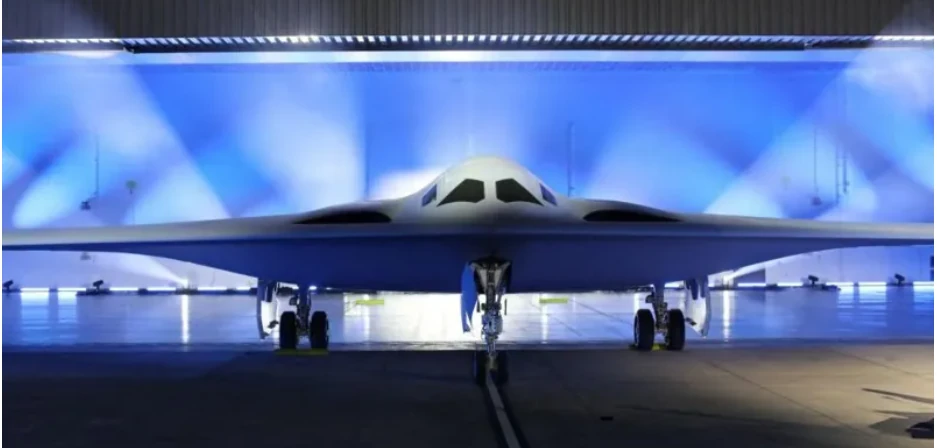
On June 22, 2025, the U.S. launched Operation Midnight Hammer, targeting Iran’s Fordo, Natanz, and Isfahan nuclear facilities with 12 GBU-57 Massive Ordnance Penetrator (MOP) bunker-buster bombs dropped by B-2 stealth bombers and 24 Tomahawk cruise missiles from a submarine. President Trump declared the strikes “a spectacular military success,” claiming Iran’s nuclear program was “completely and fully obliterated.” However, a U.S. intelligence assessment reported the strikes set Iran’s nuclear capability back by only a few months, a claim the White House called “flat-out wrong.”
The strikes followed Israel’s attacks starting June 13, 2025, targeting Iran’s nuclear sites, ballistic missile facilities, and military leaders, including Hossein Salami, commander of the Islamic Revolutionary Guard Corps (IRGC), and nuclear scientist Fereydoon Abbasi. Netanyahu justified the operation as “a targeted military operation to roll back the Iranian threat to Israel’s survival,” claiming Iran was “close to producing a nuclear bomb.” Iran denies pursuing nuclear weapons, and IAEA chief Rafael Grossi rejected claims of an imminent bomb, though Iran’s 60% enriched uranium stockpile raised concerns.
Iran retaliated with over 100 drones and ballistic missiles targeting Israel, killing 24 people and wounding hundreds. A missile hit Soroka Hospital in Beersheba, which Iran claimed targeted a nearby IDF command center. Israel’s Iron Dome intercepted most projectiles but faced strain. Iran also launched six ballistic missiles at the U.S. Al Udeid Air Base in Qatar on June 23, 2025, with no reported casualties.
Israel’s U.N. Ambassador Danny Danon called the strikes “an act of self-defense” after October 7, 2023, when Hamas, an Iran-backed group, attacked Israel, killing 1,200 people. Danon claimed Iran had “enough material for multiple nuclear weapons.” Iran’s Foreign Minister Abbas Araghchi condemned the U.S. action as crossing “a very big red line,” vowing retaliation but not specifying how. A ceasefire was announced on June 24, 2025, but tensions persist.
Why Now? Trump’s Dual Objectives
Javed Ali, a Middle East expert at the University of Michigan, noted that Trump’s strikes aimed to destroy Iran’s ability to produce or store highly enriched uranium in a one-time operation rather than a prolonged war. The military goal was to cripple Iran’s nuclear program, while the political goal was to project strength without fully committing the U.S. to conflict. Trump, who has long opposed a nuclear-armed Iran, balanced his “no war” promise to his base with decisive action, possibly encouraged by Israel’s initial success.
Iran’s Response Options
Iran faces a dilemma. With 40,000 U.S. troops in the region—stationed in Iraq, Syria, Qatar, Bahrain, Kuwait, and the UAE—Iran could target U.S. bases with ballistic missiles, drones, or cruise missiles. However, its proxy network, the Axis of Resistance, is weakened. Hezbollah and Hamas are battered from Israeli strikes, and Houthi capabilities in Yemen are limited after Operation Rough Rider, where the U.S. launched over 1,000 strikes from March to May 2025. Shia militias in Iraq and Syria have been inactive recently, reducing Iran’s options. Stephen Zunes from the University of San Francisco warned that Iran might target U.S. naval assets in the Persian Gulf or disrupt global shipping, impacting oil prices.
The Path Forward
The U.S. and Iran have a history of missed opportunities. The JCPOA showed diplomacy could work, but its collapse empowered Iran’s hardliners. Netanyahu’s push for war and Trump’s strikes reflect a belief that only force can stop Iran’s nuclear ambitions. Yet, Seyed Hossein Mousavian, a former Iranian diplomat, called this a “fabricated narrative” akin to the 2003 Iraq invasion, suggesting regime change motives. A ceasefire holds for now, but Iran’s Supreme Leader Ayatollah Ali Khamenei vowed defiance, and the risk of escalation looms.
Could Iran adopt “Americanism” and align with the U.S., as some hope? Its revolutionary ideology and pride make this unlikely. The younger generation must understand this history to grasp why peace remains elusive. Will diplomacy return, or will retaliation spiral into a broader war? The answer depends on Iran’s next move.
Sources
- Historical Context (1953-2020): Details on the 1953 coup, 1979 Islamic Revolution, 1980 hostage crisis, Iran-Iraq War, Iran-Contra affair, post-9/11 cooperation, Axis of Evil, JCPOA, and Soleimani assassination are from the original text, supplemented by The Conversation and Al Jazeera for context on U.S.-Iran relations.
- 2025 Strikes: Information on Operation Midnight Hammer, Fordo, Natanz, Isfahan, bunker-buster bombs, Tomahawk missiles, and quotes from Trump (“completely and fully obliterated”), Araghchi (“crossed a very big red line”), Netanyahu (“roll back the Iranian threat”), and Danon (“act of self-defense”) are from the original text, corroborated by NPR, AP News, The New York Times, The Conversation, and Times Now News.
- Iran’s Retaliation: Details on Iran’s drone and missile attacks on Israel, the Al Udeid strike, and casualty figures are from NPR, CBS News, Reuters, and X posts. Zunes and Mousavian quotes on retaliation options and narrative are from Al Jazeera
- Proxy Forces: Information on Hezbollah, Hamas, Houthis, and Shia militias is from the original text, with additional context on Operation Rough Rider and weakened proxies from The Conversation and Council on Foreign Relations.
- Ceasefire: Details on the June 24, 2025, ceasefire and Khamenei’s defiance are from The New York Times
- https://www.whitehouse.gov/articles/2025/06/irans-nuclear-facilities-have-been-obliterated-and-suggestions-otherwise-are-fake-news/
- https://www.af.mil/News.aspx
Author, Ryan Bridglal, 07-02-2025
#featured #bridgenewzcom #bridgenewz #breakingnews #breaking #news #facts #political #usa #iran #Israel #bomb #nuclear #program #death #loss #crisis #situationroom #war #presidentdonaldtrump #trump #usaf #military