- What is freedom of speech? Do we have any?
- Are you protected from your employer for freedom of speech-expression?
- Are there laws prohibiting employers from taking adverse action against employees for engaging in lawful off-duty activities or using lawful products, politics while off-duty?
- Which U.S. States allow protection?
Freedom of Speech in 2025: A Right Under Scrutiny
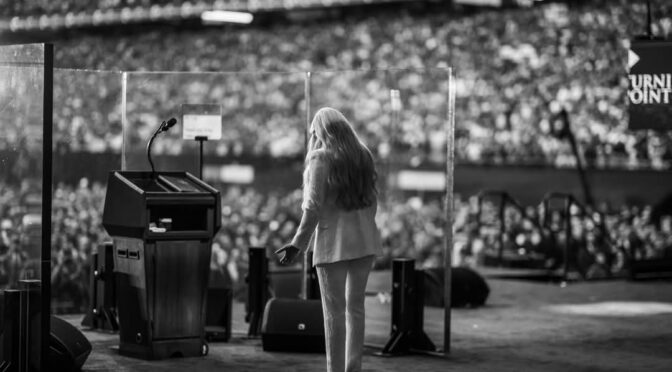
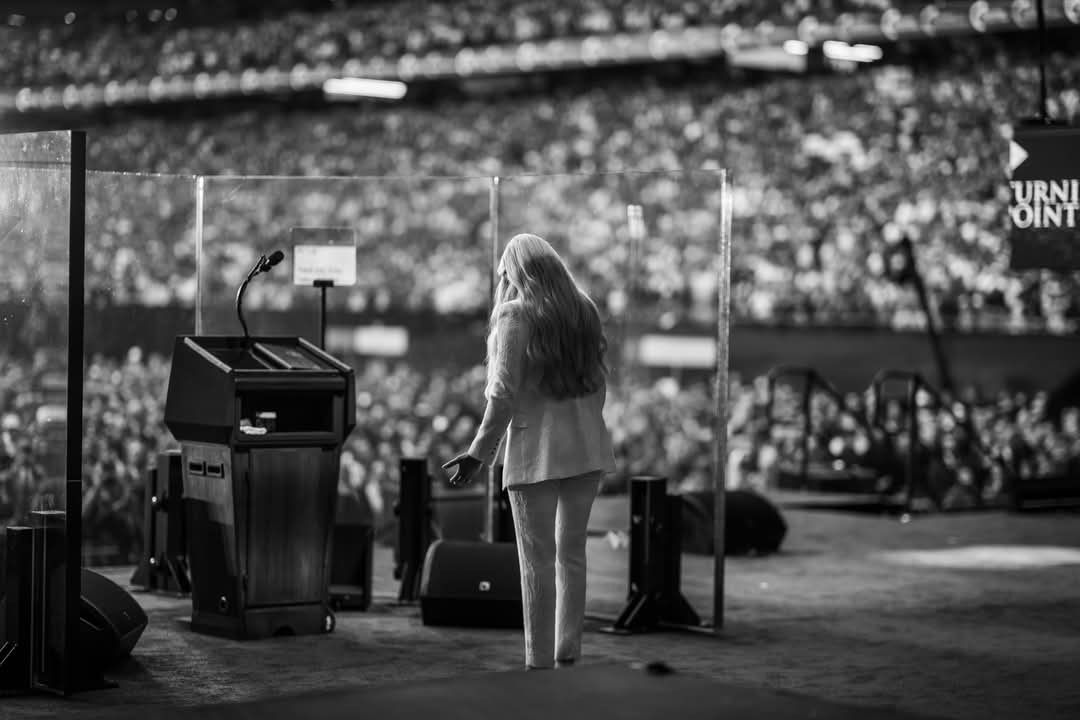
In 2025, the question of what constitutes freedom of speech remains a critical issue, as public discourse is increasingly shaped by both government policies and private entities. On Sunday, September 21, 2025, Erika Kirk delivered a powerful speech at a memorial for her late husband, Charlie Kirk, speaking behind bulletproof glass at State Farm Stadium in Glendale, Arizona. Her remarks, which included forgiving her husband’s killer, underscored the challenges of expressing beliefs in today’s polarized world. This article explores the state of freedom of speech, its legal protections, limitations, and the growing influence of private entities, while addressing whether individuals are protected from employer actions based on their beliefs.
Erika Kirk’s Speech: A Symbol of Resilience
During a seven-hour memorial event attended by 95,000 people, including President Donald Trump and other administration officials, Erika Kirk, wife of the late Charlie Kirk, spoke publicly for the first time since her husband’s murder. Standing behind bulletproof glass, she began her speech by recalling a 2023 speech in which her husband quoted Isaiah 6:8, stating, “Here I am, Lord, send me.” She noted that afterward, she had told her husband to warn her before making such bold statements, reflecting the risks associated with public expression.
Erika Kirk’s speech was a poignant moment of forgiveness. Addressing the 22-year-old suspected of shooting and killing her husband, she said, “My husband, Charlie, wanted to save young men just like the one who took his life.” Quoting scripture, she added, “On the cross, our savior said, ‘Father, forgive them, for they not know what they do.’ That man. That young man. I forgive him.” Her comments, delivered at the memorial, were met with a standing ovation, highlighting the power of free expression even in the face of personal tragedy and heightened security measures.
The necessity of bulletproof glass during her speech raises a broader question: Why must individuals speak their beliefs from behind such barriers in 2025? This symbolizes the tension between exercising free speech and the risks it entails, both in public and private spheres.
Defining Freedom of Speech
Freedom of speech is the right to speak, write, and share ideas and opinions without facing punishment from the government. Enshrined in the First Amendment to the U.S. Constitution, this right prohibits Congress from making laws that curtail freedom of speech. However, this protection is not absolute, and the government can restrict speech under specific circumstances, including:
- Obscenity and Indecency: In Alliance for Community Media v. FCC (1996), the Supreme Court ruled that obscenity and child pornography have no First Amendment protection, allowing the government to ban such content outright. Indecency, defined as content depicting or describing offensive sexual activity, is protected speech, but the government may regulate it on radio and television if there is a compelling reason and the regulation is the least restrictive means possible.
- Defamation: Both private and public figures can sue for defamatory statements. Public figures must prove the statement was made with malice, meaning the speaker knew it was false or acted with reckless disregard for its truth, as established in New York Times v. Sullivan (1964). Private figures must show the speaker failed to act with reasonable care.
- Incitement: Speech intended to incite imminent and likely law violations, directed at a person or group, is not protected under the First Amendment, as determined in Brandenburg v. Ohio (1969).
- Fighting Words: Speech that provokes immediate violence or hostility, known as “fighting words,” is also unprotected.
While the First Amendment protects individuals from government censorship, it does not extend to private entities, such as companies or employers, which have significant leeway to regulate speech within their domains.
Freedom of Speech and Private Entities
The First Amendment applies only to government actions, leaving private entities like employers, social media platforms, and organizations free to restrict speech without legal repercussions. This distinction has significant implications in 2025, as employers increasingly terminate employees for their beliefs or actions based on those beliefs, and private platforms regulate content at their discretion.
For example, in 2021, companies like Facebook, Instagram, and Twitter banned President Donald Trump from their platforms without legal consequence, citing violations of their community standards. Similarly, during the 2020 COVID-19 pandemic, platforms like Facebook and YouTube removed misleading information about the virus, demonstrating their authority to moderate content.
The Supreme Court has consistently upheld the rights of private entities to regulate speech. In Manhattan Community Access Corporation v. Halleck (2019), the Court ruled that Manhattan Neighborhood Network, a nonprofit operating public access channels in Manhattan, was not a state actor and thus not subject to the First Amendment. The organization suspended two employees after complaints about a film they produced, and the employees argued this violated their free speech rights. The Court disagreed, affirming that private entities are not bound by First Amendment restrictions.
Similarly, in Nyabwa v. Facebook (2018), the Southern District of Texas dismissed a lawsuit from a plaintiff whose Facebook account was locked after posting about President Trump’s business conflicts of interest. The plaintiff claimed a violation of his First Amendment rights, but the court ruled that the First Amendment applies only to government entities, not private companies like Facebook.
Are Employees Protected from Employer Actions?
The question of whether employees are protected from adverse actions by employers for exercising free speech is complex. The First Amendment does not prevent private employers from disciplining or terminating employees for their speech or actions, whether on or off duty. However, some states have laws prohibiting employers from taking adverse actions against employees for engaging in lawful off-duty activities or using lawful products while off-duty. For example, states like California and New York have labor laws that offer limited protections for off-duty conduct, but these vary widely and do not guarantee comprehensive free speech protections in the workplace.
In the absence of federal laws explicitly protecting employees’ off-duty speech, employers can legally terminate individuals for expressing controversial beliefs, particularly if those beliefs conflict with company policies or public image. This reality underscores the vulnerability of employees in 2025, where expressing personal beliefs—whether political, social, or religious—can lead to professional consequences.
You/We should research on the internet. Example: Does Nevada protect political expression in off duty conduct?
The Answer:
Yes, Nevada has laws that protect employees from being discriminated against for their lawful off-duty political activities, as long as those activities do not adversely affect their job performance. However, the protections can vary, so it’s important to understand the specific context and circumstances.
Nevada’s Protection of Political Expression
General Overview
In Nevada, employees have some protections regarding their political expression during off-duty hours. The state law prohibits employers from discriminating against employees for lawful activities conducted outside of work, as long as these activities do not adversely affect job performance.
Specific Protections
Lawful Off-Duty Activities: Nevada law protects employees from being discriminated against for engaging in lawful activities, including political expression, during their nonworking hours.
Political Activities: Employees can participate in political activities, such as campaigning or voting, without fear of retaliation from their employer, provided these activities do not interfere with their job duties.
Limitations
Impact on Job Performance: If an employee’s off-duty political activities negatively impact their work performance or create issues in the workplace, the employer may have grounds for disciplinary action.
Private Employer Rights: The First Amendment does not apply to private employers, meaning they can regulate political expression within their workplaces more strictly than public entities.
Conclusion
While Nevada offers protections for political expression during off-duty hours, employees should be aware of the potential limitations based on job performance and workplace impact.
The Broader Context in 2025
Erika Kirk’s speech behind bulletproof glass and the broader trend of employer actions against employees’ beliefs highlight a paradox: while the First Amendment guarantees freedom from government censorship, individuals face increasing constraints in private spheres. The necessity of physical protection for public speech, as seen in Kirk’s case, reflects a polarized society where expressing beliefs can invite hostility or danger. Meanwhile, the lack of First Amendment protections in private workplaces and platforms raises questions about the practical extent of free speech in modern America.
It’s a shame, really, that in 2025, individuals must navigate such risks to express their beliefs, whether speaking publicly or facing workplace repercussions. As Kirk’s forgiveness speech demonstrated, the act of speaking out can be profoundly impactful, yet it comes with challenges that test the boundaries of free expression.
Sources
- Cornell Legal Information Institute: Freedom of Speech
- Alliance for Community Media v. FCC, 529 U.S. 803 (1996)
- New York Times v. Sullivan, 376 U.S. 254 (1964)
- Brandenburg v. Ohio, 395 U.S. 444 (1969)
- Manhattan Community Access Corporation v. Halleck, 139 S. Ct. 1921 (2019)
- Nyabwa v. Facebook, No. 2:17-CV-24 (S.D. Tex. 2018)
- Litter.com
- Nevadaemployers.org
- whitehouse.gov
Author Ryan Bridglal, 09/23/2025
#featured #bridgenewzcom #bridgenewz #breakingnews #breaking #news #businessnews #rights #civilrights #humanrights #freedom #speech #freedomofspeech #charlie #kirk #erika #charliekirk #erikakirk #whitehouse