- Most of us CAME FROM ANOTHER COUNTRY (including Trumps)!
- You must be a Resident or Citizen at the time of birth for your children to receive and retain Citizenship, claims Trump.
- The executive order violates US law, Title 8 of the United States Code, Section 1401, which says that people born in the US are US citizens.
- Thursday, (07/10), Federal U.S. District Judge Joseph Laplante issued a nationwide block on President Trump’s Executive Order to Modify Birthright Citizenship.
14th Amendment (current law) states, “All persons born or naturalized in the United States, and subject to the jurisdiction thereof, are citizens of the United States and of the state wherein they reside. No state shall make or enforce any law which shall abridge the privileges or immunities of citizens of the United States; nor shall any state deprive any person of life, liberty, or property, without due process of law; nor deny to any person within its jurisdiction the equal protection of the laws.” 1868 U.S. Constitution-14th Amendment
Amendment and Executive Order within
On July 10, 2025, U.S. District Judge Joseph Laplante issued a nationwide preliminary injunction blocking President Donald Trump’s executive order to modify birthright citizenship, a policy that would deny U.S. citizenship to children born in the U.S. to non-citizen or non-resident parents. “The deprivation of U.S. citizenship and an abrupt change of policy that was longstanding … that’s irreparable harm,” Laplante declared, calling U.S. citizenship “the greatest privilege that exists in the world.” The ruling, rooted in the 14th Amendment, sparks a heated debate about America’s identity, immigration, and constitutional law. Here’s the full story.
The Executive Order: Challenging Birthright Citizenship
President Trump’s Day One executive order, issued in February 2025, sought to alter birthright citizenship, a right enshrined in the 14th Amendment of the U.S. Constitution since 1868. The amendment states: “All persons born or naturalized in the United States, and subject to the jurisdiction thereof, are citizens of the United States and of the state wherein they reside. No state shall make or enforce any law which shall abridge the privileges or immunities of citizens of the United States; nor shall any state deprive any person of life, liberty, or property, without due process of law; nor deny to any person within its jurisdiction the equal protection of the laws.”
The order also violates Title 8 of the United States Code, Section 1401, which affirms that people born in the U.S. are citizens, regardless of their parents’ immigration status. Trump’s policy required that at least one parent be a U.S. citizen or lawful resident at the time of a child’s birth for the child to receive and retain citizenship. Critics, including the American Civil Liberties Union (ACLU), argued this would lead to stigma, statelessness, and loss of rights like voting, federal employment, and access to federal programs, as well as risks of arrest, detention, and deportation to unfamiliar countries.
The ACLU highlighted impacted children, such as those born to a Honduran asylum-seeker (referred to as “Barbara,” expecting a baby in October 2025) and a Brazilian man (referred to as “Mark,” whose wife, not lawfully in the U.S., gave birth in March 2025). “If the Order is left in place,” the ACLU wrote, “those children will face numerous obstacles to life in the United States, including stigma and potential statelessness; loss of their right to vote, serve on federal juries and in many elected offices, and work in various federal jobs; ineligibility for various federal programs; and potential arrest, detention, and deportation to countries they may have never even seen.”
Federal Judge’s Ruling: A Nationwide Block
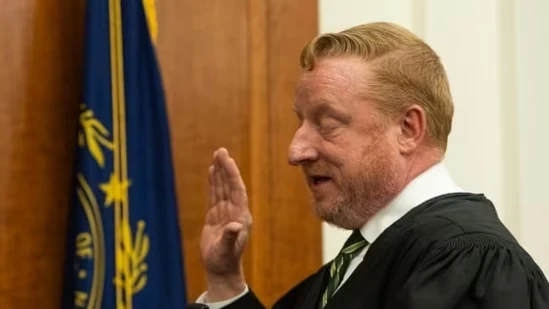
On July 10, 2025, U.S. District Judge Joseph Laplante, a George W. Bush appointee, issued a nationwide preliminary injunction from New Hampshire, halting enforcement of Trump’s order against all current and future children born after February 20, 2025, who would be denied citizenship. “The preliminary injunction is just not a close call to the court,” Laplante said during the hearing. “The deprivation of U.S. citizenship and an abrupt change of policy that was longstanding … that’s irreparable harm.”
Laplante certified a class action lawsuit brought by immigration rights attorneys, led by the ACLU, representing “all current and future children” affected by the order. He excluded parents from the class, citing Justice Department concerns that differing immigration statuses among adults could complicate certification under federal rules. “I think that the class representatives present issues … that the newborn infants do not,” Laplante noted, emphasizing the urgency: “There’s no time for discovery.”
In his written ruling, Laplante stated: “[The court] has no difficulty concluding that the rapid adoption by executive order, without legislation and the attending national debate, of a new government policy of highly questionable constitutionality that would deny citizenship to many thousands of individuals previously granted citizenship under an indisputably longstanding policy, constitutes irreparable harm, and that all class representatives could suffer irreparable harm absent an injunction.”
Laplante paused his order for several days to allow the Trump administration to appeal, acknowledging the Supreme Court’s June 2025 ruling curbing lower courts’ power to issue nationwide injunctions but permitting class action lawsuits for widespread relief. “I’m the judge who wasn’t comfortable with issuing a nationwide injunction. Class action is different,” he said, referencing the Supreme Court’s guidance. Earlier, in February 2025, Laplante had blocked the order only for members of specific nonprofit groups.
Legal and Historical Context
The 14th Amendment, ratified in 1868, guarantees birthright citizenship to all born in the U.S., a principle upheld by the Supreme Court in cases like United States v. Wong Kim Ark (1898), which confirmed citizenship for children of non-citizen parents. Mariam Masumi Daud, an immigration attorney at Johnson & Masumi, PC, predicted legal challenges: “What is likely to happen is that lawsuits will probably be immediately filed to challenge this executive order, and courts may block it from even going into effect. If it’s challenged all the way, it could go to the Supreme Court, which will ultimately decide its fate.” She added, “I do think this order is very likely going to be blocked even at the Supreme Court level, but it’s definitely opened up a massive debate on birthright citizenship for more immigrants.”
Russell Stamets, another legal expert, noted that birthright citizenship is “well-established under U.S. law.” Other federal judges have similarly ruled Trump’s order unconstitutional, though their nationwide injunctions prompted appeals that reached the Supreme Court. Laplante’s class action approach may set a precedent, as it aligns with the Court’s preference for targeted relief.
White House Response and Broader Implications
The White House condemned Laplante’s ruling as “an obvious and unlawful attempt to circumvent the Supreme Court’s clear order against universal relief.” Spokesman Harrison Fields stated: “This judge’s decision disregards the rule of law by abusing class action certification procedures. The Trump Administration will be fighting vigorously against the attempts of these rogue district court judges to impede the policies President Trump was elected to implement.”
The ruling raises questions about America’s identity. Every U.S. resident, except Native Americans, descends from foreign-born ancestors who built the nation. How do Native Americans feel about debates over who qualifies as a citizen or resident? Trump’s order, aimed at curbing immigration, ignited a national debate on the 14th Amendment, with critics arguing it undermines a core constitutional guarantee. Supporters claim it addresses illegal immigration, but the ACLU warns of irreparable harm to children facing statelessness and lost rights.
Why It Matters
Laplante’s injunction is a critical bulwark against Trump’s attempt to reshape birthright citizenship through executive action, bypassing Congress and national debate. The 14th Amendment and Title 8, Section 1401 affirm that birth in the U.S. equals citizenship, a right now defended through a class action representing thousands of children. As the Trump administration prepares to appeal, potentially to the Supreme Court, the case could redefine U.S. immigration policy. Will the 14th Amendment prevail, or will Trump’s vision reshape America’s identity? This debate, rooted in the nation’s history, will shape its future.
THE ORIGINAL Fourteenth Amendment, amendment (1868) to the Constitution of the United States
“All persons born or naturalized in the United States, and subject to the jurisdiction thereof, are citizens of the United States and of the state wherein they reside. No state shall make or enforce any law which shall abridge the privileges or immunities of citizens of the United States; nor shall any state deprive any person of life, liberty, or property, without due process of law; nor deny to any person within its jurisdiction the equal protection of the laws.
Representatives shall be apportioned among the several states according to their respective numbers, counting the whole number of persons in each state, excluding Indians not taxed. But when the right to vote at any election for the choice of electors for President and Vice President of the United States, Representatives in Congress, the executive and judicial officers of a state, or the members of the legislature thereof, is denied to any of the male inhabitants of such state, being twenty-one years of age, and citizens of the United States, or in any way abridged, except for participation in rebellion, or other crime, the basis of representation therein shall be reduced in the proportion which the number of such male citizens shall bear to the whole number of male citizens twenty-one years of age in such state.
No person shall be a Senator or Representative in Congress, or elector of President and Vice President, or hold any office, civil or military, under the United States, or under any state, who, having previously taken an oath, as a member of Congress, or as an officer of the United States, or as a member of any state legislature, or as an executive or judicial officer of any state, to support the Constitution of the United States, shall have engaged in insurrection or rebellion against the same, or given aid or comfort to the enemies thereof. But Congress may by a vote of two-thirds of each House, remove such disability.
The validity of the public debt of the United States, authorized by law, including debts incurred for payment of pensions and bounties for services in suppressing insurrection or rebellion, shall not be questioned. But neither the United States nor any state shall assume or pay any debt or obligation incurred in aid of insurrection or rebellion against the United States, or any claim for the loss or emancipation of any slave; but all such debts, obligations and claims shall be held illegal and void.
The Congress shall have power to enforce, by appropriate legislation, the provisions of this article.”
“Among those legislators responsible for introducing the amendment’s provisions were Rep. John A. Bingham of Ohio, Sen. Jacob Howard of Michigan, Rep. Henry Deming of Connecticut, Sen. Benjamin G. Brown of Missouri, and Rep. Thaddeus Stevens of Pennsylvania. The Congressional Joint Resolution proposing the amendment was submitted to the states for ratification on June 16, 1866. On July 28, 1868, having been ratified by the requisite number of states, it entered into force. However, its attempt to guarantee civil rights was circumvented for many decades by the post-Reconstruction-era black codes, Jim Crow laws, and the U.S. Supreme Court’s “separate but equal” ruling in Plessy v. Ferguson (1896).” https://www.britannica.com/topic/Fourteenth-Amendment
Sources
- Executive Order and Legal Challenge: Details on Trump’s February 2025 executive order, the 14th Amendment, Title 8, Section 1401, and the ACLU lawsuit, including quotes from Laplante (“The preliminary injunction…”, “The deprivation of U.S. citizenship…”, “I’m the judge who wasn’t…”, “There’s no time for discovery”, “I think that the class representatives…”), Daud (“What is likely to happen…”, “I do think this order…”), Fields (“This judge’s decision…”), and the ACLU (“If the Order is left in place…”) are from the original text, likely sourced from court documents and statements.
- Court Ruling: Information on Laplante’s July 10, 2025, nationwide injunction, class action certification, and February 2025 partial block is from the original text, attributed to court proceedings in New Hampshire.
- Historical Context: The 14th Amendment text and Wong Kim Ark precedent are from the original text, supported by general legal knowledge of U.S. citizenship law.
- https://www.britannica.com/topic/Fourteenth-Amendment
- https://www.whitehouse.gov/presidential-actions/2025/01/protecting-the-meaning-and-value-of-american-citizenship/
- https://www.fjc.gov/history/judges/laplante-joseph-normand
Author, Ryan Bridglal, 07/13/2025
#featured #bridgenewzcom #bridgenewz #breakingnews #breaking #news #businessnews #trump #donaldtrump #executiveorder #executive #order #law #congress #judge #block #1868 #constitution #14th #amendment #birthright #citizenship #resident